

Mazapan is one of those sweets that instantly brings comfort, nostalgia, and joy with every bite. Known for its soft, crumbly texture and rich nutty flavour, mazapan has become a favourite treat across many cultures. Whether you have tasted it before or are discovering it for the first time, mazapan offers a unique experience that stands out from other traditional sweets. Its simple ingredients and delightful taste make it a timeless dessert loved by both children and adults.
This sweet treat is often associated with celebrations, holidays, and special occasions. From festive gatherings to everyday snacking, mazapan fits perfectly into any moment. What makes it even more special is how it connects people to tradition and culture. Many families have their own recipes passed down through generations, making mazapan more than just food—it’s a memory and a story.
Another reason for its popularity is how easy it is to enjoy. You don’t need fancy tools or complicated recipes to appreciate mazapan. It can be eaten on its own, added to desserts, or even used as a creative ingredient in baking. This flexibility makes it a favourite for both home cooks and professional chefs.
In this guide, you will explore everything about mazapan—from its history to its modern uses. By the end, you’ll not only understand what makes this sweet so special but also feel inspired to try it yourself.
History of Mazapan
The history of mazapan is rich and full of interesting stories that stretch back hundreds of years. Many believe that mazapan originally came from Spain, where it was made using almonds and sugar. It became especially popular in regions like Toledo, where it is still produced today using traditional methods. However, some also believe that mazapan has roots in the Middle East, where similar sweets were created long before it reached Europe.
As mazapan travelled across different regions, it adapted to local tastes and ingredients. When it arrived in Mexico, almonds were not as common, so peanuts were used instead. This gave birth to the Mexican version of mazapan, which is more crumbly and has a slightly different flavour. This shows how a simple recipe can evolve into something unique depending on where it is made.
Throughout history, mazapan has been linked to celebrations and special occasions. In Spain, it is often enjoyed during Christmas, while in Mexico, it is a popular everyday sweet. Its long history proves that mazapan is not just a passing trend but a dessert that has stood the test of time.
Today, mazapan continues to be enjoyed worldwide. While modern production methods have made it easier to produce in large quantities, many people still appreciate the traditional handmade versions. This balance between tradition and modernity is what keeps mazapan relevant even today.
Ingredients Used in Mazapan
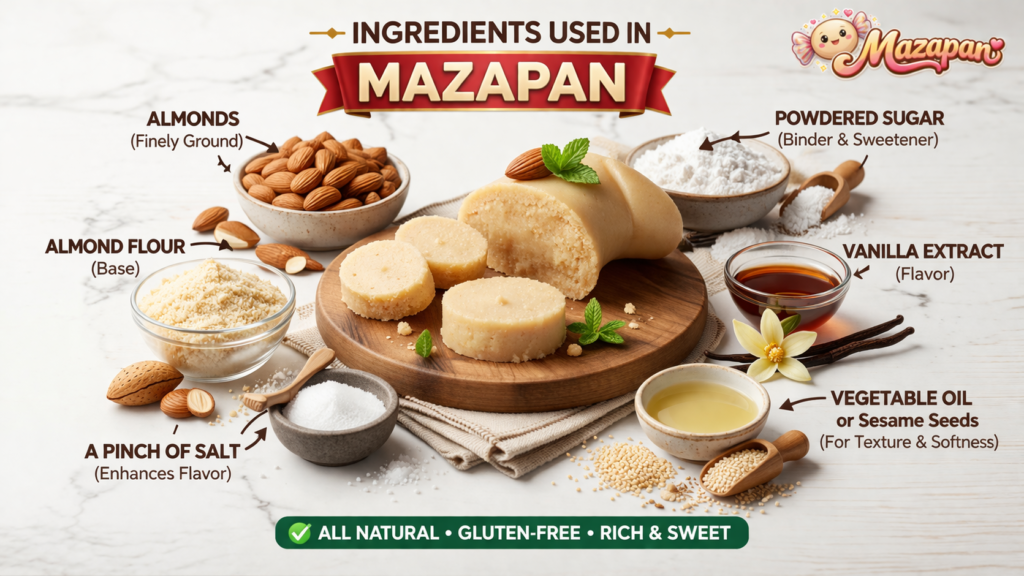
Mazapan is loved for its simplicity, and its ingredients are a big part of that charm. The basic recipe usually includes sugar and nuts, which can be almonds or peanuts depending on the region. These simple ingredients come together to create a sweet that is both rich in flavour and satisfying in texture.
In Spanish mazapan, almonds are the main ingredient. They are finely ground and mixed with sugar to create a smooth and slightly chewy texture. On the other hand, Mexican mazapan uses peanuts, giving it a more crumbly texture and a stronger nutty taste. Both versions are delicious in their own way, and the choice often depends on personal preference.
The quality of ingredients plays a big role in the final taste of mazapan. Fresh nuts and high-quality sugar can make a noticeable difference. Some recipes also include a touch of egg white or syrup to help bind the mixture together, especially in traditional preparations.
In modern times, variations of mazapan have become more creative. You may find versions with chocolate, vanilla, or even fruit flavours. Despite these changes, the heart of mazapan remains the same—simple ingredients combined in a way that creates something truly special.
How Mazapan is Made
Making mazapan is a process that combines simplicity with care. Traditionally, the nuts are ground into a fine powder and then mixed with sugar. This mixture is then shaped into small discs or figures. The process may sound simple, but achieving the perfect texture requires skill and patience.
In traditional methods, everything is done by hand. The nuts are carefully selected, ground, and mixed until the right consistency is reached. This hands-on approach allows for better control over the texture and flavour, resulting in a more authentic taste.
Modern production methods have made it easier to produce mazapan on a larger scale. Machines are used to grind, mix, and shape the sweets quickly and efficiently. While this makes mazapan more widely available, some people still prefer the handmade version for its unique texture and flavour.
If you want to try making mazapan at home, it is quite simple. All you need are nuts, sugar, and a little patience. The key is to mix the ingredients well and shape them gently. Homemade mazapan can be a fun and rewarding experience, especially when shared with family and friends.
Different Types of Mazapan Around the World
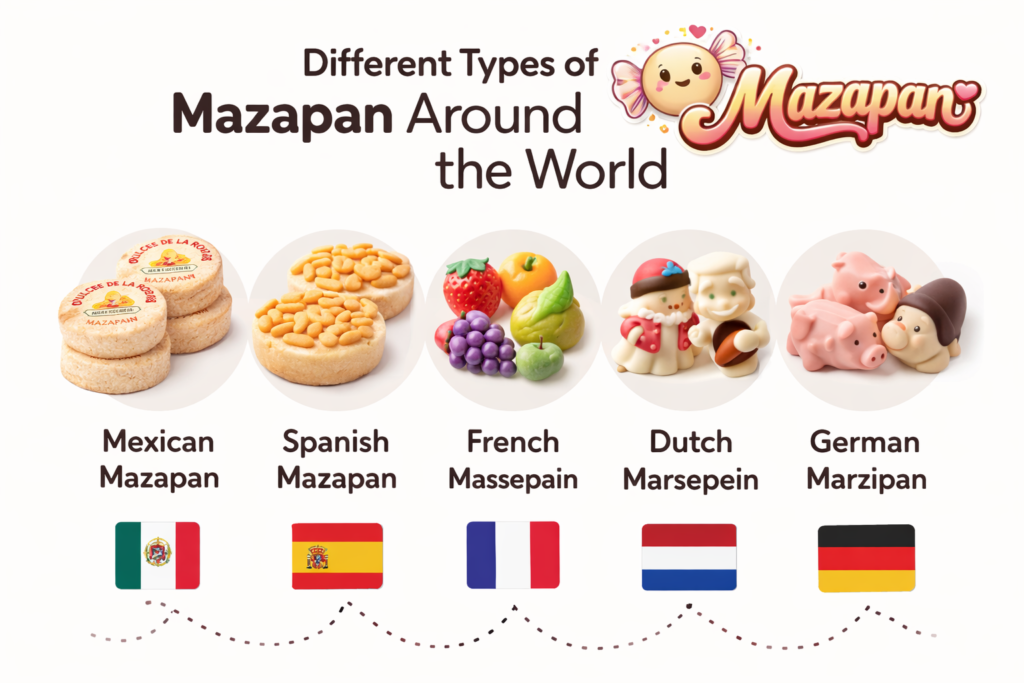
Mazapan comes in different forms depending on where it is made. Each version has its own unique taste and texture, making it interesting to explore. Spanish mazapan is known for its smooth and slightly chewy texture, often shaped into decorative figures and baked lightly.
Mexican mazapan, on the other hand, is more crumbly and made with peanuts instead of almonds. It is usually shaped into small round discs and is very popular as a quick snack. Its texture makes it easy to break apart, which is part of its charm.
Other regions have also created their own versions of mazapan. Some include additional flavours like chocolate or fruit, while others experiment with different types of nuts. These variations show how versatile mazapan can be.
Exploring different types of mazapan is like taking a journey through different cultures. Each version tells a story about the people who make it and the ingredients they use. This diversity is what makes mazapan so special and loved worldwide.
Health Aspects of Mazapan
Mazapan is a delicious treat, but like any sweet, it should be enjoyed in moderation. It is high in sugar, which means it can provide quick energy but should not be consumed in large amounts. Understanding its nutritional value can help you enjoy it responsibly.
One of the positive aspects of mazapan is its use of nuts. Nuts like almonds and peanuts contain healthy fats, protein, and important nutrients. These can provide some health benefits, especially when compared to sweets that contain no natural ingredients.
However, the sugar content in mazapan is quite high. This means it may not be suitable for people who need to limit their sugar intake. It is always a good idea to enjoy mazapan as an occasional treat rather than a daily snack.
For those looking for healthier options, there are recipes that use less sugar or alternative sweeteners. These versions may not taste exactly the same, but they can be a good option for those who want to enjoy mazapan in a more balanced way.
Mazapan in Modern Cuisine

Mazapan is no longer just a traditional sweet—it has found its place in modern cuisine. Chefs and home bakers are using it in creative ways to add flavour and texture to different dishes. From cakes to pastries, mazapan can be a versatile ingredient.
One popular use of mazapan is in baking. It can be added to cakes, cookies, and desserts to give them a rich nutty flavour. It can also be used as a filling or topping, adding both taste and texture to the final dish.
In addition to baking, mazapan is also used in creative desserts. Ice creams, chocolates, and even drinks can include mazapan as an ingredient. This shows how a traditional sweet can adapt to modern tastes and trends.
The growing popularity of mazapan in modern cuisine proves that it is more than just a simple sweet. It is a versatile ingredient that can be used in many different ways, making it a favourite for creative cooking.
How to Store Mazapan Properly
Proper storage is important to keep mazapan fresh and tasty. Since it contains sugar and nuts, it can be affected by heat and moisture. Keeping it in the right conditions can help maintain its texture and flavour.
Mazapan should be stored in an airtight container to prevent it from drying out. It is best kept in a cool, dry place away from direct sunlight. This helps preserve its quality and prevents it from becoming too hard or too soft.
If you buy mazapan from a store, it usually comes with packaging that helps keep it fresh. However, once opened, it is important to store it properly to maintain its taste. Homemade mazapan may have a shorter shelf life, so it should be consumed within a few days.
By storing mazapan correctly, you can enjoy it at its best. Simple steps like keeping it sealed and away from heat can make a big difference in its quality.
Conclusion
Mazapan is more than just a sweet—it is a blend of history, culture, and flavour. From its simple ingredients to its global variations, it continues to bring joy to people around the world. Whether you enjoy it as a snack or use it in recipes, mazapan offers something special for everyone.
Its long history and ability to adapt to different cultures make it a timeless treat. Even in modern times, it remains popular because of its unique taste and versatility. Trying mazapan is not just about enjoying a dessert—it’s about experiencing a piece of tradition.
If you haven’t tried mazapan yet, now is the perfect time. Whether you buy it or make it at home, you are sure to enjoy its rich and satisfying flavour.
Frequently Asked Questions
1. What is mazapan made of?
Mazapan is typically made from sugar and nuts, such as almonds or peanuts.
2. Is mazapan the same in all countries?
No, it varies by region. Spanish mazapan uses almonds, while Mexican mazapan uses peanuts.
3. Can I make mazapan at home?
Yes, it is easy to make with simple ingredients and basic steps.
4. Is mazapan healthy?
It contains nutrients from nuts but is high in sugar, so it should be eaten in moderation.
5. How long does mazapan last?
Store-bought mazapan can last longer, while homemade versions should be eaten within a few days.
6. Can mazapan be used in recipes?
Yes, it can be used in cakes, desserts, and many creative dishes.
7. Where can I buy mazapan?
It is available in supermarkets, online stores, and specialty sweet shops.